Elevate Your VR Flight Sim: Comfort, Full Motion, & Crystal Clarity
For aviation enthusiasts and dedicated simmers, the dream of truly flying has long been pursued through increasingly realistic software and hardware. Yet, the advent of Virtual Reality (VR) has transformed this pursuit, offering an unprecedented level of immersion. But to truly soar, simply strapping on a headset isn't enough. The ultimate experience demands a fully integrated vr flight simulator cockpit – a convergence of full-motion dynamics, breathtaking visual clarity, and unwavering comfort.
Imagine not just seeing the cockpit, but *feeling* every banking turn, every subtle vibration, every jolt of turbulence. Picture a world where the distant horizon is sharp, and every instrument is readable with crystal clarity, all while remaining comfortable enough to undertake multi-hour flights. This is the promise of today's most advanced VR flight simulator setups, meticulously engineered to transport you from your room directly into the pilot's seat.
The Core of Immersion: A Dynamic VR Flight Simulator Cockpit
At the heart of an unparalleled VR flight simulation experience lies the motion platform. This isn't just about a moving chair; it's about a sophisticated system designed to move your entire environment, creating a physical sensation that perfectly syncs with your virtual flight. A truly dynamic vr flight simulator cockpit provides an immersive feedback loop that transforms a visual experience into a visceral one.
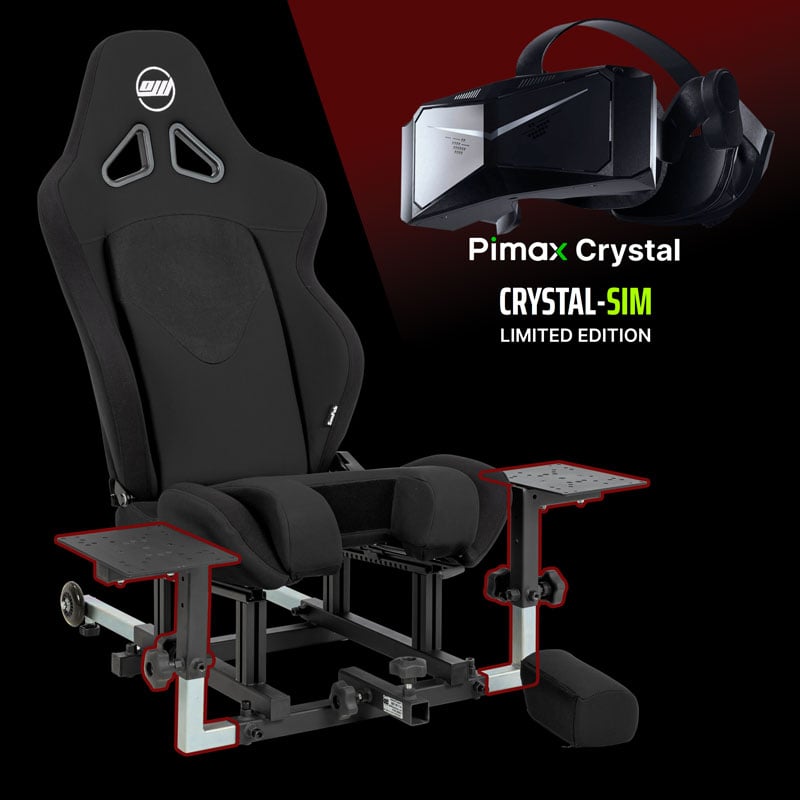
Companies like DOF Reality are pioneering this space, offering motion simulator platforms that are not just performant but also designed with rigidity and a compact footprint. Crafted from industrial steel, these platforms aren't just sturdy; they're built to integrate seamlessly into a dedicated flight setup. Crucially, they are VR compatible with leading headsets like Oculus Rift/Meta Quest and HTC Vive, and are designed to work with virtually any platform and peripheral, from your favorite joystick to advanced HOTAS (Hands-On Throttle And Stick) or General Aviation (GA) cockpit layouts.
The innovation that truly sets high-end motion platforms apart, such as the HERO models, is their ability to move the entire rig. Unlike systems where only the seat articulates, a HERO model moves your seat, along with your yoke/stick and pedals, as one cohesive unit. This full-rig movement eliminates any disconnect between what your body feels and where your controls are positioned, greatly enhancing the detailed immersion. It's the difference between feeling like you're sitting in a moving chair while operating static controls, and truly feeling like you're an integral part of a dynamically responsive aircraft.
Experience Every Gust: The Power of Full-Motion Simulation
To truly replicate the sensation of flight, a motion platform must precisely translate the forces and movements of an aircraft. Advanced platforms achieve this through multiple axes of movement. Basic systems might offer pitch and roll, mimicking the nose-up/down and wing-tilt motions. However, the most realistic flight simulator cockpits incorporate additional axes like yaw (the left-to-right swivel), and traction loss (simulating skidding or side forces), culminating in systems capable of mastering all six axes of motion for a complete, highly realistic simulation experience.
The engineering behind these platforms is paramount. When you’re banking hard, engaging in dogfights, or navigating turbulent weather, your equipment must be able to withstand significant forces. Industrial steel chassis provide the immense strength required to handle powerful direct-drive (DD) wheels that can exceed 30NM of torque, and hydraulic pedals capable of enduring over 200 kg of force. This robust construction ensures durability, stability, and responsiveness, even under the most demanding flight scenarios. Furthermore, features like quick-release systems and adjustable pedal distances and angles allow for rapid customization, ensuring optimal ergonomics for every pilot, whether for training or leisure.
The value of full-motion simulation extends beyond mere entertainment. For aspiring pilots, these advanced Ultimate VR Flight Sim Immersion: Motion Platforms & High-Res VR systems provide invaluable training, helping develop muscle memory and an intuitive understanding of aircraft dynamics in a safe, controlled environment. They are increasingly found in professional settings, from racing driver training to public entertainment centers and VR arcades, testament to their effectiveness in delivering high-fidelity experiential learning.
Crystal Clarity and Unrivaled Comfort: The VR Headset Revolution
While motion platforms provide the physical sensations, it's the VR headset that delivers the visual reality. And for flight simulation, visual fidelity is not just a luxury; it's a necessity. Being able to discern distant runways, read complex instrument panels, and appreciate the subtle nuances of weather patterns requires a level of clarity far beyond what many consumer-grade headsets can offer. This is where high-fidelity VR headsets, like the Varjo Aero, step in to redefine the flight simulation experience.
The Varjo Aero, often described as a flight simmer’s dream, boasts advanced ergonomics and true-to-life visual fidelity. Its cutting-edge optical design features variable-resolution aspheric lenses that push pixels tighter together directly in front of you. This results in an ultra-sharp peak resolution of 35 PPD (pixels per degree) at the center of focus – mimicking the intricate way the human eye works. To put this in perspective, many alternative commercially available headsets max out closer to 20 PPD, offering a significantly less crisp image. Unlike the often murky experience provided by consumer-grade Fresnel lenses, the aspheric lenses in the Aero provide incredible clarity, ensuring every detail, near and far, is rendered with precision, offering a true-to-life ‘in-cockpit’ perspective.
Beyond visual prowess, comfort is paramount for extended VR flight sessions. The Varjo Aero shines here with its advanced ergonomics and a built-in active cooling system. As dedicated simmers will attest, spending hours in a VR headset can lead to discomfort, fatigue, and even overheating. The Aero’s design addresses these issues, ensuring you can stay comfortably immersed for multi-hour flights. As one passionate flight sim enthusiast put it, "The comfort over long hours of flying is something that is really crucial to the experience of VR and making you feel like you are there, and that you almost forget you are wearing a VR headset." This ability to "forget you are wearing a VR headset" is the ultimate testament to an ergonomic design, allowing you to fully lose yourself in the flight without distraction.
Building Your Ultimate VR Flight Simulator Cockpit: Beyond the Basics
Crafting the ultimate vr flight simulator cockpit is about more than just piecing together components; it's about creating a cohesive, high-performance environment where every element works in harmony. It starts with the robust foundation of an industrial-strength motion platform capable of handling the forces generated by high-end peripherals. Integrating your preferred HOTAS, yokes, rudder pedals, and throttle quadrants into this moving chassis is critical for that unified, immersive feel.
The choice of VR headset is equally pivotal. Prioritizing visual clarity and comfort, as exemplified by devices offering high PPD and advanced cooling, ensures that the digital world you inhabit is as vivid and enduring as possible. When considering these elements together, you’re not just buying equipment; you're investing in an experience that blurs the lines between reality and simulation. For a deeper dive into the technological marvels that power these setups, explore how Next-Gen VR Flight Cockpits: Industrial Steel Frames & 35 PPD Visuals are setting new benchmarks.
When planning your own setup, consider the space you have available and the level of fidelity you seek. While high-end systems represent a significant investment, the return in terms of immersion, enjoyment, and even practical training benefits is unparalleled. A well-designed vr flight simulator cockpit is a long-term asset, providing countless hours of exhilarating, true-to-life flight.
The evolution of VR flight simulation has brought us to an incredible frontier. By combining full-motion simulator platforms that move the entire cockpit, with VR headsets offering crystal-clear visuals and exceptional comfort, we can now achieve an unprecedented level of immersion. This powerful synergy transforms virtual flight from a mere game into a profound, true-to-life experience, allowing enthusiasts to truly feel, see, and live the dream of flight with astonishing realism. The sky is no longer the limit; it's just the beginning of your next incredible journey.